Most temporary tattoo suppliers set minimum orders at 500 or 1,000 pieces. That threshold forces a specific kind of risk: you commit to a design, a quantity and a price point before you have any market signal that the product will sell. If it does not, the unsold inventory is a sunk cost that also occupies storage space and ties up cash.
A 100-piece MOQ changes the economics of that decision. It separates validation from volume into two independent steps. You test first with real sales data, then scale only what the data supports. This page explains how that workflow operates in practice, where the cost trade-offs lie, and which product categories fit this approach better than others.
The value of a 100-piece minimum is not that each piece costs less. At 100 pieces you pay the base unit price without volume discounts. The value is that the total capital at risk on an unvalidated design drops from hundreds of dollars to tens of dollars.
With a traditional 500-1,000 piece minimum from a trading company, every new design is a bet you cannot afford to lose. With a 100-piece minimum, the same design becomes an experiment you can afford to run. The question shifts from “am I confident enough to order 1,000?” to “can I learn something useful from 100?” The answer is almost always yes.
This is the detail that matters most, and many suppliers do not offer it. Within a single 100-piece order, you can split the quantity across multiple designs. That means one test order can validate three to five different patterns, themes or colourways simultaneously.
Without this option, testing is serial: order 100 of design A, wait for production and shipping, sell through, evaluate, then order 100 of design B. Each cycle takes weeks. With mixed designs, testing becomes parallel: all candidates arrive together, go to market together, and produce comparable data in the same time window. The validation period compresses from multiple procurement cycles into one.
For an Etsy seller launching a new shop, this might mean testing a floral set, a geometric set and a seasonal set in the same order. For a brand evaluating packaging concepts, it might mean running three label variants side by side. The mechanism is the same: convert guesswork into measured comparison.
Honesty about pricing is necessary here. At 100 pieces, you are paying the base factory-direct rate:
Volume discounts of up to 40% apply at 500+ pieces. A 100-piece test order does not qualify for that discount. The per-unit cost is genuinely higher.
The relevant comparison, however, is not between the 100-piece unit price and the 500-piece unit price. It is between the cost of a 100-piece test order and the cost of holding unsold inventory from a 500-piece order on a design that does not sell. The price premium on 100 pieces is the insurance premium against committing to the wrong product. In most cases, that premium is smaller than the loss from dead stock.
Important disclosure: Physical samples cost $50–$100 and are fully refunded only on orders exceeding 500 pieces. If your first order is 100 pieces, the sample fee is not refunded. Budget for it as a non-recoverable validation cost.
This is a real constraint worth planning around. The sample itself serves a clear purpose: you verify print quality, colour accuracy, adhesive strength and wear duration on actual skin before committing to any production run. Sample production takes 3–5 business days plus 2–4 days shipping via DHL, FedEx or UPS.
If you plan to scale to 500+ pieces after validating with a 100-piece test order, the sample fee from the initial sampling round will be credited against that larger order. But if your business model is built on repeated small batches rather than scaling, treat the sample fee as a fixed cost of product development rather than a refundable deposit.
Not every product category fits the “test 100, then scale” workflow. Seasonal timing determines whether serial validation is physically possible.
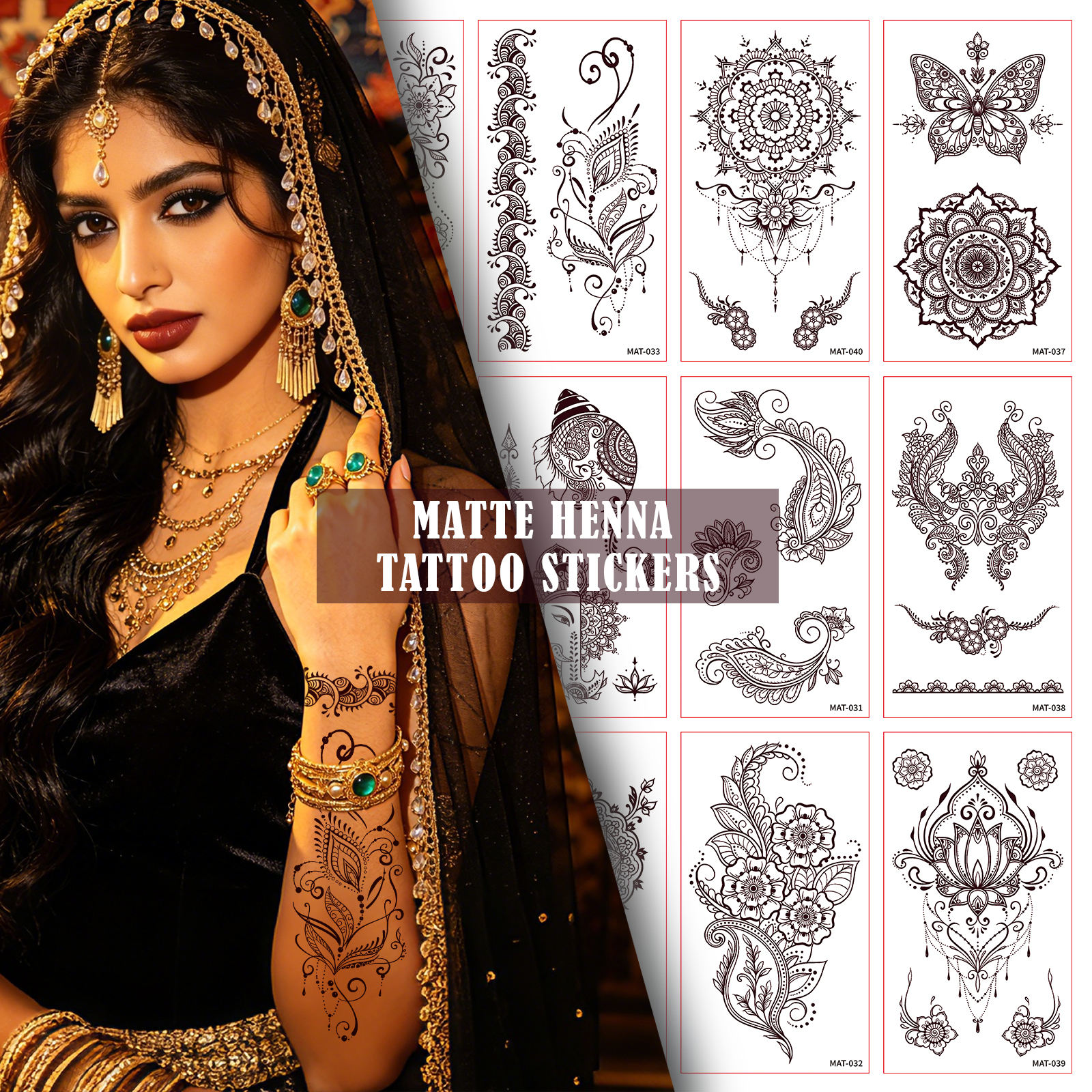
Year-round products that suit test orders: Matte, glow-in-the-dark, semi-permanent herbal and waterless tattoos sell consistently throughout the year. There is no deadline pressure. You can run a 100-piece test, evaluate results over two to four weeks, adjust the design, and place a scaled order without missing a market window. These are ideal candidates for the full test-validate-scale methodology.
Seasonal products where test orders carry timing risk: Halloween tattoos peak in September–October and should be ordered by July. Christmas tattoos peak in November–December and should be ordered by August–September. Glow, UV and fluorescent products for festival season (May–September) should be ordered by March–April.
In these cases, the calendar may not allow a serial test-then-scale cycle. By the time a 100-piece test order arrives, sells through and produces data, the ordering window for the seasonal peak may have closed. For seasonal products, consider either ordering your estimated full volume directly based on prior-year data, or using a 100-piece test order one season early to inform next year’s commitment.
The 500-piece mark is the key inflection point in the pricing and policy structure. Three things change at 500 pieces:
A practical scaling path looks like this: start with a 100-piece mixed-design test order to identify which designs resonate. Reorder the winning designs at 200–300 pieces to confirm demand is repeatable rather than a one-time novelty. Once a design has demonstrated consistent sell-through, commit to 500+ pieces to unlock the volume discount and recover sample costs.
Production lead time is 7–15 business days for standard orders and 5–7 days for rush orders (20% surcharge). Shipping options are DHL/FedEx/UPS at 3–7 days, air freight at 7–12 days, or sea freight at 25–35 days. Plan accordingly when timing a scale-up against a product launch or event date.
The difference between sourcing from a factory and sourcing from a middleman becomes more pronounced at small quantities, because the overhead that intermediaries add is proportionally larger on a small order.
| Factor | Factory-direct (LowMOQPrint) | Trading companies |
|---|---|---|
| Minimum order | 100 pieces | Usually 500–1,000+ |
| Design revisions | Free, unlimited | Paid add-on |
| Response time | Within 24 hours | 2–5 days |
| Certifications (FDA, EN-71, CPSIA) | Available on request | Varies, often unavailable |
| Production updates | Photos and video during production | Limited or none |
| Sample fee refund | Refunded at 500+ pieces | Rarely refunded |
| Pricing | Factory-direct rates | 30–50% markup typical |
Comparison based on publicly available information from trading company listings and LowMOQPrint manufacturing records.
At 100 pieces, the 30–50% intermediary markup applies to an already small order, making the absolute dollar difference modest but the percentage impact significant. More importantly, the ability to get free design revisions and real-time production visibility matters disproportionately when you are still iterating on a design rather than reordering a proven one.
A common concern among first-time buyers is whether small orders receive the same compliance documentation as large ones. They do. FDA-compliant ink certification, EN-71 test reports, CPSIA documentation, ISO 9001 factory certification and MSDS sheets are available on request for any order size, including 100 pieces.
This matters because regulatory requirements do not decrease with order size. A retailer selling 100 units faces the same product safety obligations as one selling 10,000. The certificates are issued against the product and the manufacturing process, not against the purchase order. Request them during the sampling phase so they are in hand before your first shipment arrives.
For a detailed breakdown of what each certification covers, see our FDA and EN-71 compliance guide.
Payment methods accepted are T/T (bank transfer), PayPal, Western Union and Alibaba Trade Assurance. Standard terms are 30% deposit with 70% balance before shipment. For a 100-piece order, the total outlay is typically well under $100 before shipping, making the deposit amount manageable for first-time buyers testing a new supplier.
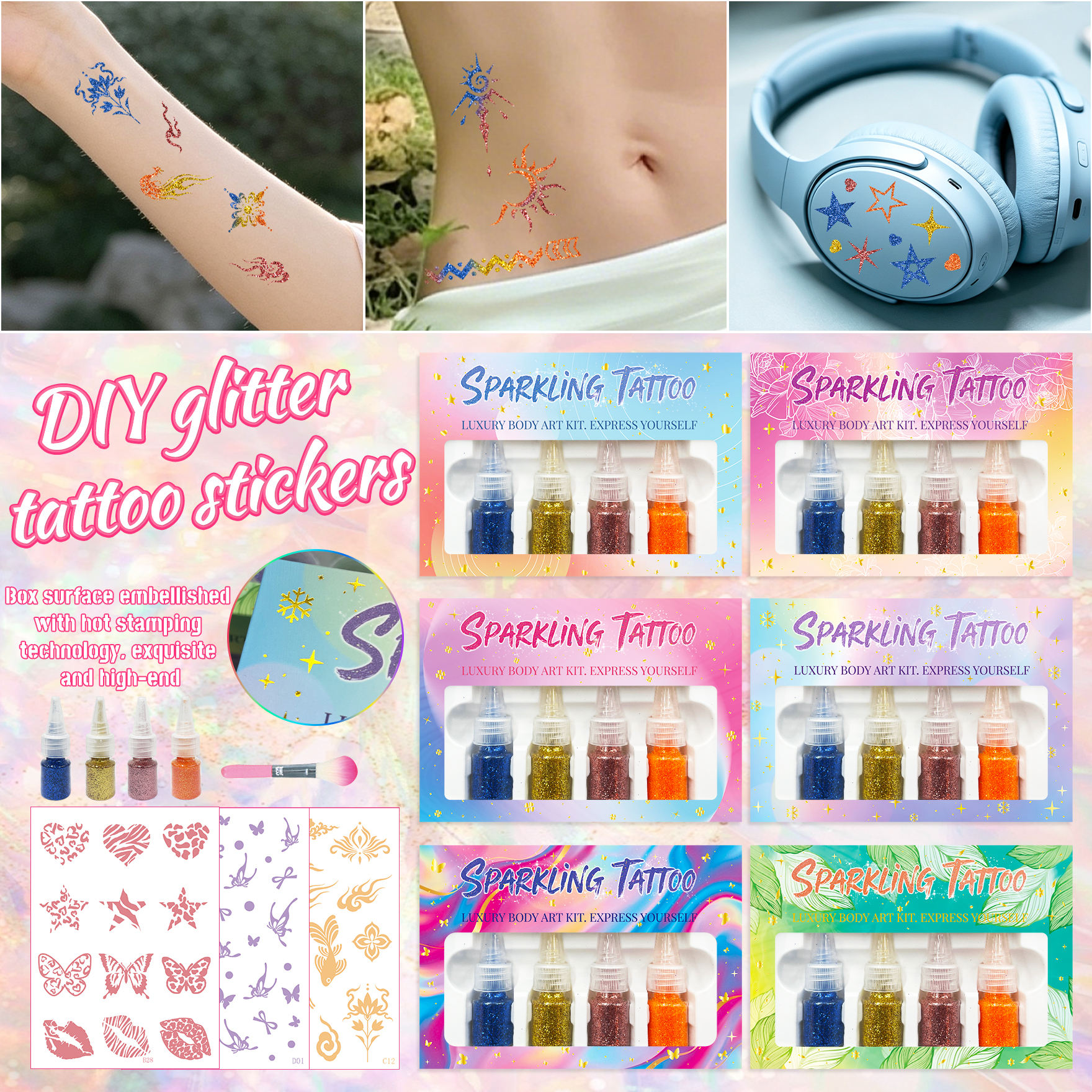
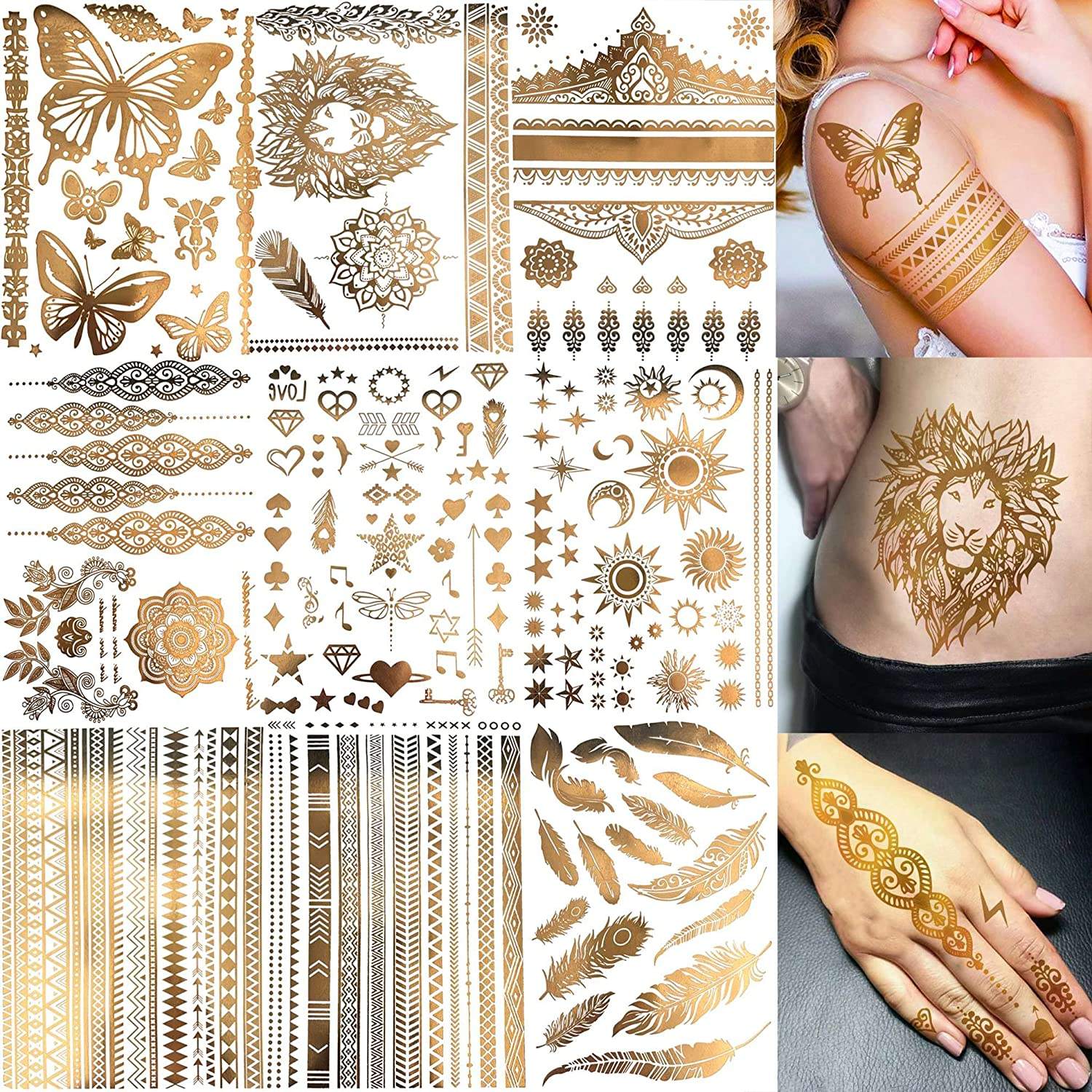
All tattoo types are waterproof and sweat-resistant. Wear duration varies by format: standard water-transfer lasts 3–7 days, semi-permanent herbal lasts 7–15 days, metallic foil lasts 4–6 days, glow-in-the-dark glows for 4–6 hours, and DIY glitter kits last 3–5 days. See the full type comparison for all 12 formats side by side.
Yes. Within a single 100-piece order you can split the quantity across multiple designs, patterns or colourways. This lets you test several candidates simultaneously rather than waiting for sequential production cycles. Many buyers use this to validate three to five designs in one order.
No. Sample fees of $50–$100 are fully refunded only on orders exceeding 500 pieces. If your first order is 100 pieces, budget the sample fee as a non-recoverable validation cost. If you later scale to 500+ pieces, the sample fee will be credited against that larger order.
Volume discounts of up to 40% apply at 500+ pieces. The 500-piece threshold is also the point at which sample fees are refunded. Below 500 pieces, you pay the base factory-direct rate: $0.15–$0.80 for standard formats, $0.20–$0.90 for metallic and UV types, $0.20–$1.00 for DIY glitter kits.
Sometimes, but the calendar may not allow it. Halloween tattoos should be ordered by July for September–October peak; Christmas tattoos by August–September for November–December peak. A serial test-then-scale cycle may exceed the ordering window. For seasonal products, either order your estimated volume directly based on prior data, or test one season early to inform the next year’s order.
Yes. FDA-compliant ink certification, EN-71 test reports, CPSIA documentation, ISO 9001 factory certification and MSDS sheets are available on request for any order size including 100 pieces. Certificates are issued against the product and manufacturing process, not the purchase order quantity.
Standard production is 7–15 business days after artwork approval. Rush production at 5–7 days is available with a 20% surcharge. Shipping adds 3–7 days via DHL/FedEx/UPS, 7–12 days by air freight, or 25–35 days by sea freight. If you also need a physical sample first, add 3–5 days production plus 2–4 days shipping for the sample round.
Tell us your product type, target market and timeline. We will confirm pricing, advise on sampling, and provide a free digital mockup before production.
Chat With Peter on WhatsApp