How to Test Temporary Tattoo Samples Properly Before Your Bulk Order
Most failed bulk orders are not caused by a bad factory. They are caused by a sample judged in the wrong room. A glow-in-the-dark design reviewed under office lighting looks flat. A UV design checked indoors looks blank. A fluorescent set examined without a blacklight looks like a printing error. The buyer then rejects artwork that would have performed well, or approves it without ever seeing the effect customers pay for.
This guide covers sample cost and lead time, the right evaluation environment for each format, water and sunscreen exposure, wear-time benchmarks, a copyable test log, and timeline planning.
Sample Cost, Lead Time and the Refund Rule
Physical samples cost $50-$100 depending on format and artwork complexity. Production takes 3-5 days and shipping 2-4 days, so a sample normally arrives within a week to nine days of artwork approval. The fee is fully refunded on orders over 500 pieces.
One disclosure we state plainly: a 100-piece trial order does not carry a sample fee refund. That MOQ is low enough to act as the test run itself, so the refund applies from 500 pieces upward. Packaging is a separate line with a 500-piece MOQ.
Request bulk pricing and compliance paperwork at sample stage, not later. Standard formats run $0.15-$0.80 per piece, metallic foil and UV color-changing $0.20-$0.90, glitter kits $0.20-$1.00, custom packaging $0.50-$2.00. FDA, EN-71, CPSIA, ISO 9001 and MSDS certificates are available on request. Free design support with unlimited revisions is included, so sampling-stage artwork changes add no cost.
The Core Rule: Evaluate Under Real Conditions of Use
Specialty formats depend on a light source a desk does not provide. Test each one where it is sold, and record the result there, not from memory the next morning.
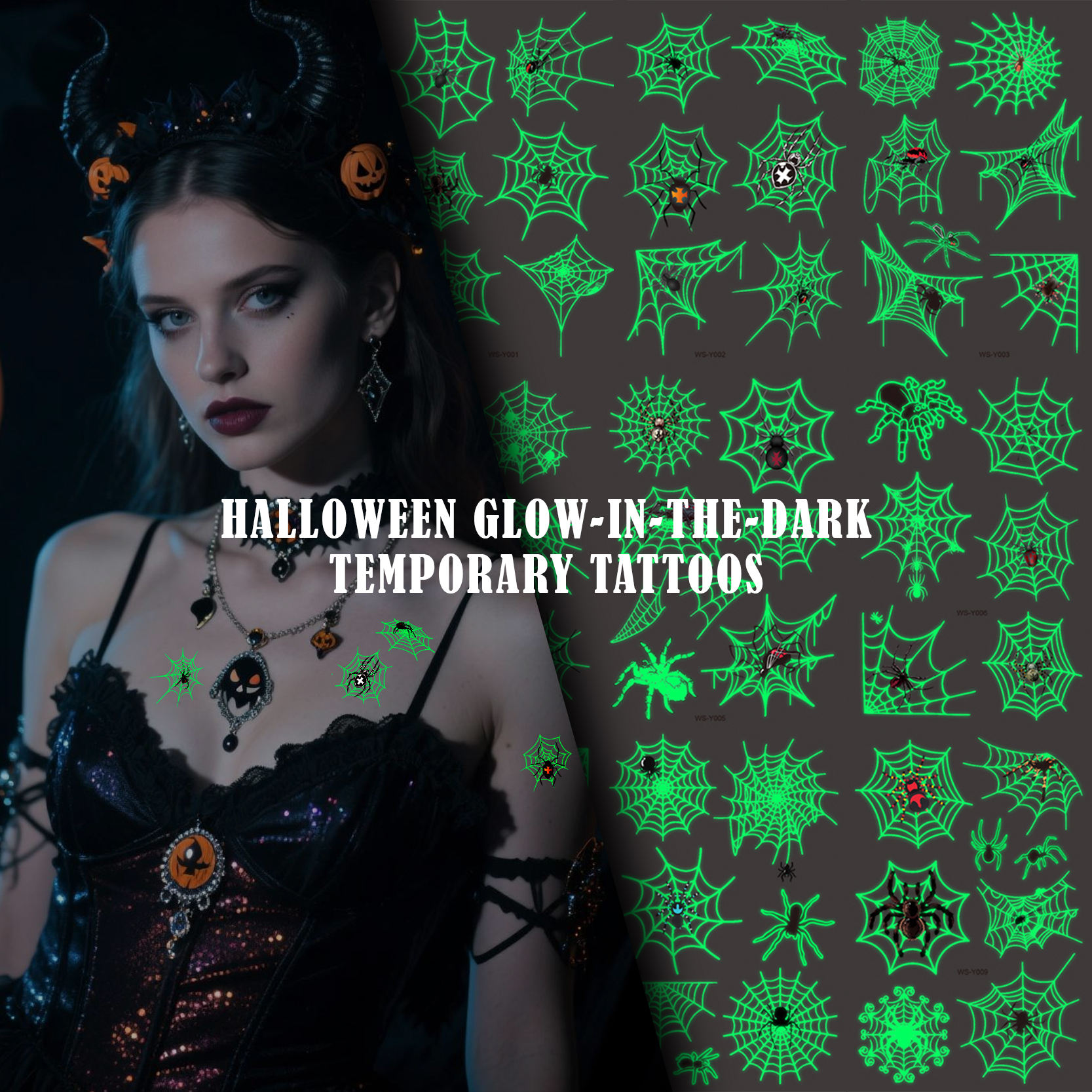
Glow-in-the-dark: test in real darkness
Phosphorescent ink charges under light and glows 4-6 hours in darkness. Judging it in a lit room tells you nothing: under office lighting the design reads as a pale green-grey print and buyers conclude the ink is weak. Charge the applied sample under a lamp for a few minutes, then move to a windowless room or outside after sunset and switch the light off. Check the glow immediately and again later the same evening. Details are on our glow-in-the-dark tattoo page.
UV color-changing: test in real sunlight
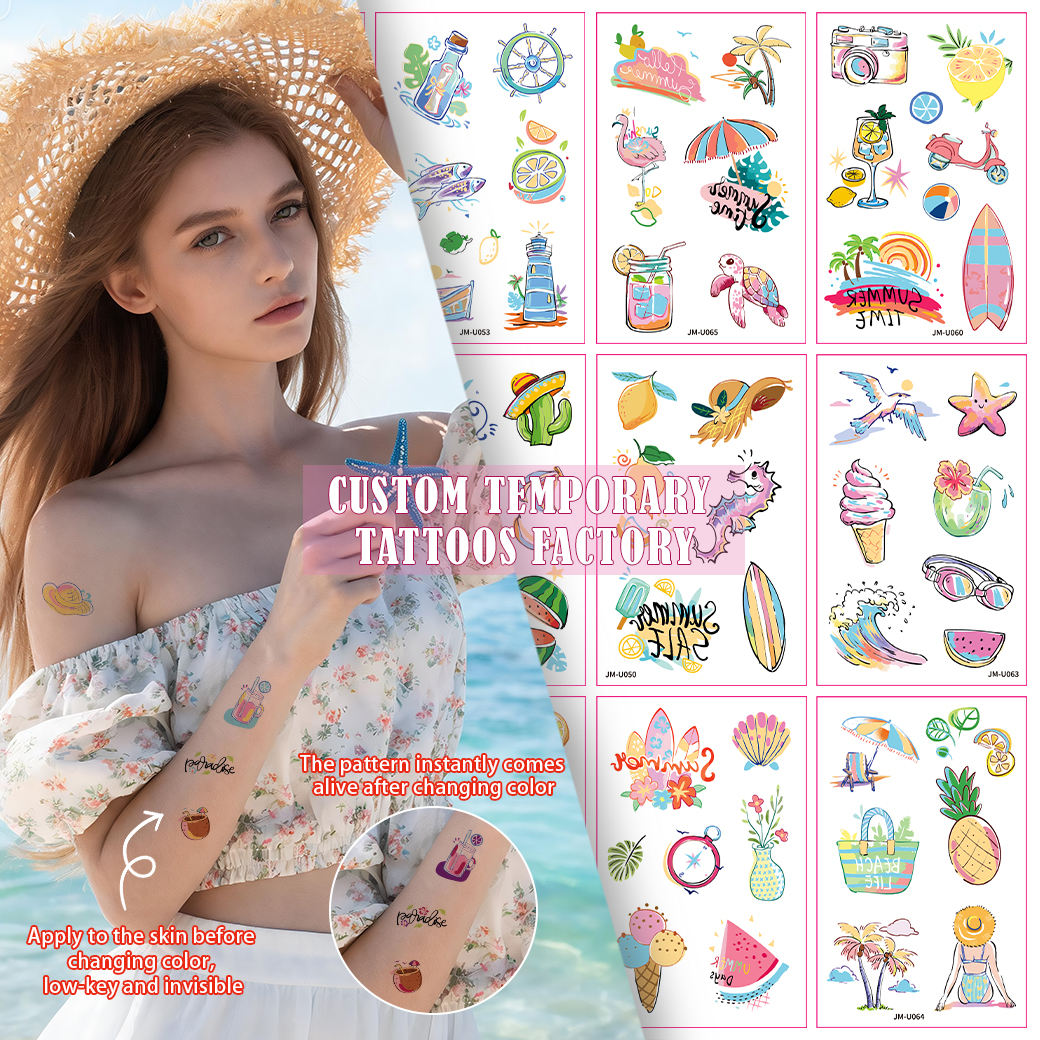
UV-reactive ink is close to invisible indoors and reveals its color under sunlight or UV light. Reviewing it at a desk under LED panels is the most common false rejection we see, because the sample genuinely looks unfinished indoors. Apply it, go outside in daylight, photograph indoors and outdoors within the same hour and compare the frames. If the change reads clearly outdoors, the sample passes. See the UV color-changing tattoo page.
Fluorescent: test under a blacklight
Fluorescent neon ink needs a blacklight to show its glow. Without one the sample looks like ordinary bright ink and any conclusion drawn is meaningless. If your channel is clubs, raves or EDM events, arrange a blacklight before the sample arrives, test in a dark room with it on, and view the design from the distance customers will see it across a dance floor. See the fluorescent blacklight tattoo page.
Metallic foil: test with flash and check fine lines
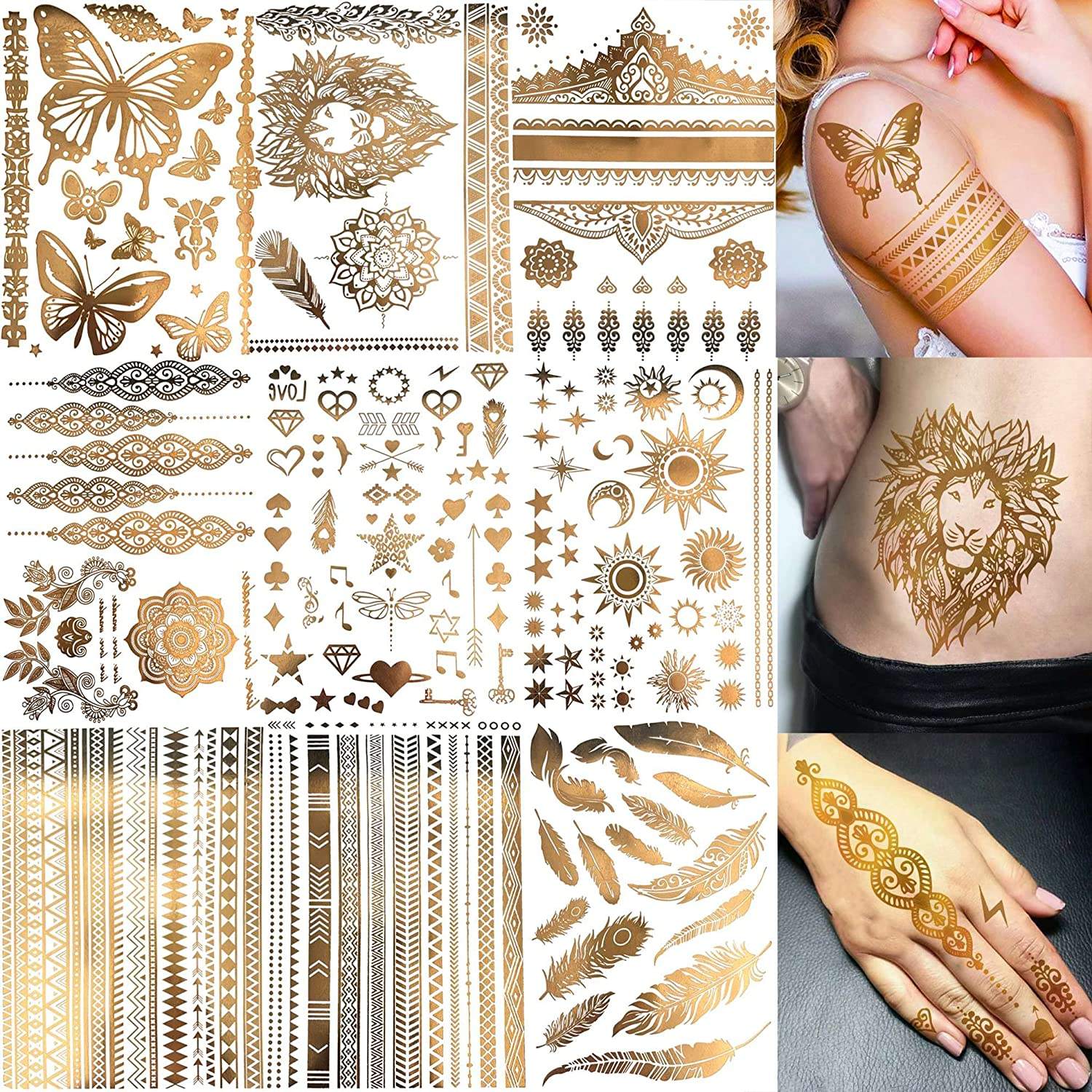
Foil reads as jewellery mainly in photography, so evaluate it the way it will be photographed. Check the applied sample under direct camera flash, then under plain daylight; the two differ significantly and your product images will come from the flash case. Then inspect fine lines, hairline strokes and small type under magnification. Foil can break up on very thin detail, which is why delicate linework must be sampled rather than approved from a digital proof. See the metallic foil tattoo page.
Always test on the target skin area
Hands, fingers and the neck face constant friction, frequent washing and clothing contact, so a design there fades faster. Forearm, upper arm and ankle are lower-friction areas and hold the print longer. Apply the same design in at least two places, one high-friction and one low-friction, so product claims rest on a realistic range. This matters most for semi-permanent herbal tattoos, bought specifically for extended wear.
Water, Sweat and Sunscreen Testing
All formats we manufacture are waterproof and sweat-resistant, but that claim survives testing only if water is actually involved. Run three exposures, ideally on different body locations at once: a shower or swim, an exercise session producing real sweat, and a sunscreen application.
Sunscreen is the exposure to watch. Most sunscreens are oil-based, and oil lifts the transfer film from skin far faster than water does. For festivals, beaches or outdoor summer events, apply sunscreen over a fully dried sample and record what happens over the following hours. A design that survives a shower but breaks down under sunscreen needs a different placement recommendation, or a different format, before bulk. The DIY glitter kit line is the exception: only partially waterproof, so test and market it as a dry-conditions product. See our festival body art guide.
Normal Wear-Time Benchmarks
Use these ranges to decide whether a sample actually failed. A standard design lifting on day five is normal, not a defect.
| Format | Expected Wear | Testing Note |
|---|---|---|
| Standard water-transfer | 3-7 days | Fully waterproof; test shower and sweat |
| Semi-permanent herbal | 7-15 days | Longest wearing; needs the longest test window |
| Metallic foil | 4-6 days | Check fine lines under flash |
| DIY glitter kit | 3-5 days | Partially waterproof only |
A semi-permanent design gone on day three from a forearm, with no sunscreen exposure, is a genuine problem to raise before production. Compare all formats on our product comparison page.
A Test Log You Can Copy
Write results down as they happen. Recall of a seven-day wear test is worthless by day ten, and a written log is what you send a supplier when you need a correction.
Fit the Sample Round Into Your Project Timeline
The most expensive mistake here is scheduling. A sample round, a full wear test, bulk production and freight can run past two months together.
| Stage | Typical Duration |
|---|---|
| Sample production | 3-5 days |
| Sample shipping to you | 2-4 days |
| Wear observation window | 3-7 days standard, 7-15 days semi-permanent |
| Bulk production | 7-15 business days, or 5-7 days rush with a 20% fee |
| Freight to your warehouse | DHL/FedEx/UPS 3-7 days, air 7-12 days, sea 25-35 days |
Ordering samples three weeks before an event is the failure pattern we see most often: the buyer skips the wear test, approves on day-one appearance, and finds the problem after the bulk run is printed. If the date is tight, start the sample immediately and plan on rush production rather than shortening the test. Questions go to Peter via our contact page, with replies within 24 hours.
When You Can Skip Samples, and When You Cannot
Skipping is reasonable for a repeat order of the same artwork on the same format, where you already hold wear data from a previous run.
Never skip a sample when:
- The artwork is new, especially fine lines, small text, gradients or foil elements
- You have not sold the format before, since glow, UV, fluorescent and foil behave differently in the field
- The skin-contact scenario is new: children's products, face placement, long outdoor exposure, heavy sunscreen use
- The packaging configuration is new, because packaging carries a 500-piece MOQ
- It is a first order with a new supplier, even when the artwork is proven elsewhere
Want a sample round started this week? Message Peter on WhatsApp — send your artwork and the format you are evaluating for a sample quote within 24 hours.